Undocumented and Underserved: How API Documentation Gaps Are Silently Fracturing Engineering Teams

Photo: software developer frustrated reading API documentation on multiple monitors, via img.freepik.com
There is a particular kind of frustration that every software engineer recognizes: opening a codebase, locating an API endpoint, and finding nothing — no description, no parameter definitions, no example responses, no indication of what error codes to expect. You are left holding a black box and a deadline. This experience, repeated across teams and organizations daily, is not merely an inconvenience. It is a structural problem with measurable consequences.
Poor API documentation does not announce itself with fanfare. It accumulates quietly, one undescribed endpoint at a time, until the engineering organization discovers — usually at the worst possible moment — that the knowledge required to operate critical systems lives exclusively inside the heads of two or three engineers who have been here the longest.
The Knowledge Silo Problem
When APIs go undocumented, institutional knowledge does not disappear. It concentrates. Senior engineers become unofficial reference desks, fielding questions that could have been answered by a well-maintained README or an OpenAPI specification. This dynamic creates what organizational researchers sometimes call knowledge silos: isolated pockets of expertise that are invisible to the broader team and impossible to transfer at scale.
The cost of these silos is rarely calculated directly, but it surfaces in predictable ways. Junior developers spend hours tracing call stacks to understand what a function actually returns. Mid-level engineers duplicate work because they are unaware that a colleague solved the same problem six months ago. Entire teams operate under incorrect assumptions about how an internal service behaves, assumptions that only become visible when something breaks in production.
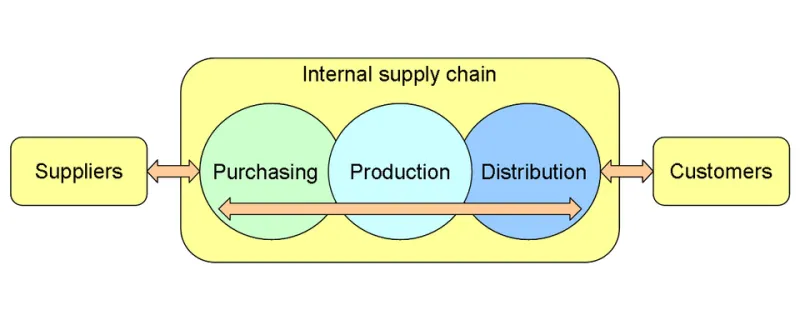
In organizations where multiple teams consume the same internal APIs — a common pattern in companies that have adopted microservices architectures — the absence of documentation functions like a tax levied on every engineering interaction. The more teams share infrastructure, the higher the tax.
Onboarding: Where the Damage Becomes Visible
Few scenarios expose documentation debt more starkly than onboarding a new engineer. A well-documented codebase allows a new hire to become productive within days. An undocumented one can extend that timeline by weeks or months, depending on the complexity of the system and the availability of the people who understand it.
Consider the compounding effect: if an organization hires ten engineers per year and each loses two additional weeks to documentation gaps during onboarding, the organization is absorbing roughly five months of lost productivity annually — before accounting for the distraction cost imposed on senior engineers who must answer questions that documentation should have addressed.
Beyond productivity, poor documentation signals something damaging about organizational culture. Engineers who struggle to find answers in their first weeks often draw accurate conclusions: that documentation is not valued here, that tribal knowledge is the norm, and that they should expect to operate in the dark. For many talented engineers, this realization accelerates their departure.
Reverse Engineering as a Survival Skill
In the absence of documentation, engineers develop workarounds. They read source code rather than specifications. They write exploratory tests to infer behavior. They ask colleagues, search Slack archives, and occasionally guess. These are not failures of individual resourcefulness — they are rational responses to an irrational situation.
The problem is that reverse engineering is expensive, error-prone, and non-transferable. The knowledge an engineer gains by spending three hours tracing an undocumented authentication flow exists only in that engineer's memory. When they leave the team, the knowledge leaves with them, and the next person repeats the process from scratch.
This cycle — undocumented behavior, reverse engineering, informal knowledge transfer, repeat — is one of the primary mechanisms by which technical debt compounds. The codebase does not become more complex, but the team's ability to understand and modify it degrades steadily over time.
What Adequate Documentation Actually Requires
The solution is not to mandate that every engineer write exhaustive prose documentation for every function they touch. That approach fails because it treats documentation as a burden rather than a discipline, and burdens tend to be avoided when deadlines approach.
Effective API documentation strategies share several characteristics.
Automation reduces friction. Tools like Swagger, Redoc, and Postman can generate documentation directly from code annotations, reducing the manual effort required to keep documentation current. When documentation generation is integrated into the CI/CD pipeline, it becomes part of the build process rather than an optional afterthought.
Standards create consistency. Engineering teams benefit from establishing clear documentation requirements for every API surface — what parameters are required, what responses are possible, what error codes mean, and what authentication mechanisms apply. These standards should be enforced through code review, not left to individual discretion.
Examples are non-negotiable. Abstract descriptions of API behavior are rarely sufficient. Concrete request and response examples, including edge cases and error conditions, dramatically reduce the cognitive load on consumers of an API. Engineers should be able to understand how to use an endpoint without running the code.
Documentation must be discoverable. Even excellent documentation fails if engineers cannot find it. Centralizing API documentation in a single, searchable location — whether an internal developer portal or a tool like Confluence or Notion — ensures that the investment in writing documentation actually pays dividends.
Building a Documentation Culture
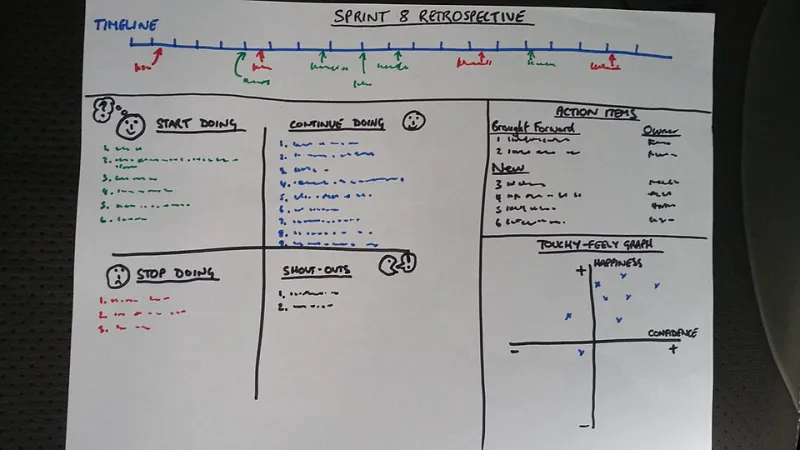
The most durable improvements to documentation quality come not from tooling but from culture. Engineering leadership must treat documentation as a first-class deliverable, equivalent in importance to working code. This means including documentation requirements in the definition of done, allocating time for documentation in sprint planning, and recognizing engineers who invest in the clarity of shared systems.
It also means being honest about the current state. Many organizations are carrying significant documentation debt — APIs that have been in production for years without ever being formally described. Addressing this debt requires prioritization: start with the APIs that are most widely consumed, most frequently misunderstood, or most critical to onboarding success.
The goal is not perfection. It is sufficiency — documentation clear enough that an engineer encountering an API for the first time can understand its purpose, use it correctly, and know where to look when something goes wrong.
The Compounding Return on Investment
Documentation is unusual among engineering investments because its returns compound over time. A well-documented API does not just help the next engineer who encounters it — it helps every engineer who encounters it, indefinitely. The effort invested in writing clear, accurate, and discoverable documentation continues to pay dividends long after the engineer who wrote it has moved on to other problems.
Organizations that treat API documentation as a strategic asset rather than a bureaucratic obligation consistently report faster onboarding, fewer production incidents caused by misunderstood behavior, and stronger cross-team collaboration. These are not soft benefits. They are competitive advantages in an industry where engineering velocity and talent retention are existential concerns.
The choice to document — or not — is a choice about what kind of engineering organization you intend to build. Undocumented systems are not neutral. They are a tax on everyone who comes after, and the bill comes due whether you plan for it or not.