The Hidden Cost of Convenience: Managing Software Supply Chain Risk in a Dependency-Heavy World
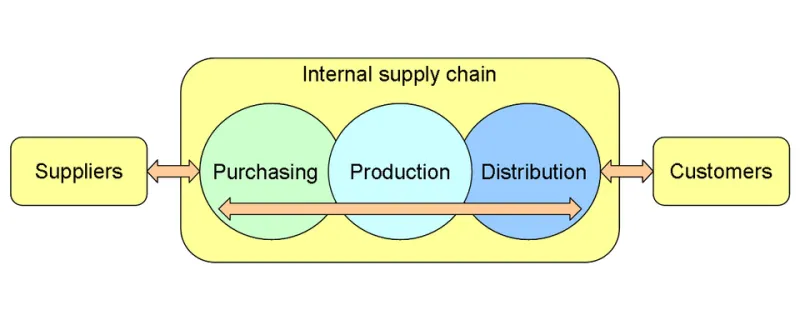
Photo: Stern, CC BY-SA 3.0, via Wikimedia Commons
The average Node.js application installs hundreds of packages when it runs npm install. A Spring Boot project pulls in dozens of transitive dependencies before a single line of business logic is written. Python applications built on popular data science frameworks carry dependency trees of considerable depth and complexity. This is the reality of modern software development: we build on the shoulders of giants, and we frequently have no idea what those giants are standing on.
For most of software's history, this arrangement was treated as an unqualified good. Why rewrite what already exists? Open-source libraries accelerate development, reduce bugs in common functionality, and allow small teams to build at a scale that would otherwise require enormous engineering investment. These benefits are real, and they are not going away.
What has changed is the threat landscape. The software supply chain — the network of open-source packages, build tools, and third-party services that modern applications depend upon — has become one of the most actively targeted attack surfaces in enterprise software. The consequences of complacency are no longer theoretical.
Understanding the Threat Surface
Software supply chain risk manifests in several distinct forms, each requiring a different response.
Outdated dependencies are the most common and most overlooked. A library that was current eighteen months ago may now contain known vulnerabilities that have been publicly disclosed, catalogued in the National Vulnerability Database, and actively exploited in the wild. Engineering teams that do not maintain a regular dependency update cadence are, in effect, operating with unlocked doors.
Unmaintained packages present a subtler risk. A library with no active maintainer will not receive security patches when vulnerabilities are discovered. It will not be updated to maintain compatibility with the rest of the dependency tree. Over time, it becomes a liability that is difficult to remove because other parts of the application have come to depend on it. The left-pad incident of 2016, in which a developer unpublished a small but widely used npm package and broke thousands of builds, offered an early glimpse of how fragile dependency ecosystems can be. More recent incidents have been considerably more consequential.
Transitive vulnerabilities are perhaps the most insidious category. When your application depends on Library A, and Library A depends on Library B, and Library B contains a critical vulnerability, your application is exposed — even if you have never heard of Library B and it does not appear in your direct dependency list. Most engineering teams have limited visibility into their transitive dependency graph, which means they may be carrying significant risk without knowing it.
Malicious packages represent an increasingly sophisticated threat. Attackers have demonstrated the ability to compromise legitimate packages through maintainer account takeover, to publish packages with names deliberately similar to popular libraries (a technique called typosquatting), and to inject malicious code into packages that appear benign. The SolarWinds attack, which compromised the software build process of a widely used IT management platform and affected thousands of downstream organizations including US federal agencies, illustrated the catastrophic potential of supply chain compromise at scale.
Auditing What You Have
The first step toward supply chain security is visibility. Engineering teams cannot manage risk they cannot see, and most teams have surprisingly limited awareness of the full scope of their dependency footprint.
Several tools make this auditing process tractable. npm audit, pip-audit, and Bundler-audit provide dependency vulnerability scanning within their respective ecosystems, cross-referencing installed packages against known vulnerability databases and producing reports that prioritize findings by severity. These tools are free, widely available, and can be integrated into CI/CD pipelines with minimal effort — making them an obvious starting point for teams that have not yet established a scanning practice.
Snyk, Dependabot, and OWASP Dependency-Check offer more comprehensive scanning capabilities, including transitive dependency analysis, automated pull request generation for dependency updates, and integration with GitHub, GitLab, and Bitbucket workflows. Dependabot, which is built into GitHub, has become a particularly common choice for teams already operating on that platform, as it requires no additional tooling and provides automated remediation suggestions.
For organizations with more sophisticated requirements, Software Composition Analysis (SCA) tools such as Black Duck or Mend (formerly WhiteSource) provide enterprise-grade dependency management capabilities, including license compliance tracking and policy enforcement — a consideration that is particularly relevant for organizations that distribute software commercially.
Governance Strategies That Scale
Tooling alone is insufficient. Sustainable supply chain security requires governance frameworks that embed security considerations into engineering workflows rather than treating them as periodic audits.
Establish a dependency update cadence. Engineering teams should schedule regular dependency reviews — monthly at minimum, weekly for high-risk environments — and treat dependency updates as routine maintenance rather than exceptional events. Allowing dependencies to fall significantly behind current releases makes eventual updates more disruptive and more risky.
Define an approved package policy. Not every package on npm or PyPI is appropriate for production use. Organizations benefit from establishing criteria for evaluating new dependencies before they are introduced: minimum download thresholds, active maintenance indicators, license compatibility, and security track record. This policy does not need to be bureaucratic — a lightweight checklist reviewed during code review is often sufficient — but it should exist.
Lock dependency versions in production. Lock files (package-lock.json, Pipfile.lock, Gemfile.lock) ensure that the exact dependency versions used in development are the versions deployed to production. Without lock files, builds are non-deterministic, and a dependency update that introduces a vulnerability can slip into production without any deliberate decision being made.
Integrate scanning into the pipeline. Vulnerability scanning should happen automatically on every build, not manually on a quarterly schedule. When a scan fails due to a critical vulnerability, the build should fail. This approach makes supply chain security a continuous practice rather than a compliance checkbox.
Maintain a software bill of materials. A Software Bill of Materials (SBOM) is a formal, machine-readable inventory of all components in an application, including their versions and provenance. SBOMs have gained significant regulatory attention following the Biden administration's 2021 executive order on improving the nation's cybersecurity, which mandated SBOM practices for software sold to the federal government. Even for organizations not subject to federal procurement requirements, maintaining an SBOM provides a foundation for rapid response when new vulnerabilities are disclosed.
Balancing Security and Development Speed
A common objection to rigorous dependency governance is that it slows teams down. This concern is legitimate — poorly implemented security processes can create friction that engineers work around rather than through. The goal is not to make dependency management burdensome but to make it automatic.
When dependency scanning is integrated into CI/CD, when update pull requests are generated automatically, and when policies are enforced through tooling rather than manual review, the overhead on individual engineers is minimal. The teams that report the greatest friction from supply chain security practices are typically those that have allowed dependency debt to accumulate to the point where remediation requires significant manual effort — a situation that earlier, lighter-touch governance would have prevented.
Convenience has always been the primary argument for third-party dependencies. It remains a valid one. But convenience without visibility is a liability, and in the current threat environment, engineering teams that cannot account for what their applications are built on are carrying risks they have not chosen to accept. The tools and practices to address this exist, they are accessible, and the cost of implementing them is a fraction of the cost of a supply chain compromise.